The Forbes Health editorial team is independent and objective. To help support our reporting work, and to continue our ability to provide this content for free to our readers, we receive compensation from the companies that advertise on the Forbes Health site. This compensation comes from two main sources. First, we provide paid placements to advertisers to present their offers. The compensation we receive for those placements affects how and where advertisers’ offers appear on the site. This site does not include all companies or products available within the market. Second, we also include links to advertisers’ offers in some of our articles; these “affiliate links” may generate income for our site when you click on them.
The compensation we receive from advertisers does not influence the recommendations or advice our editorial team provides in our articles or otherwise impact any of the editorial content on Forbes Health. While we work hard to provide accurate and up-to-date information that we think you will find relevant, Forbes Health does not and cannot guarantee that any information provided is complete and makes no representations or warranties in connection thereto, nor to the accuracy or applicability thereof. Rechargable Hearing Aids
Nearly 10% of U.S. adults experience some form of tinnitus, also described as “ringing in the ears,” according to the National Institute on Deafness and Other Communication Disorders (NIDCD)[1]Quick Statistics About Hearing. The National Institute on Deafness and Other Communication Disorders. Accessed 12/12/2022. . What’s more, 90% of tinnitus cases occur with an underlying degree of hearing loss, reports the Hearing Health Foundation[2]Hearing Loss & Tinnitus Statistics. Hearing Health Foundation. Accessed 12/12/2022. . While there aren’t any known cures for tinnitus, a number of available treatments can help manage its uncomfortable symptoms and disruptive side effects, one of which includes the use of hearing aids.
To determine the best hearing aids for tinnitus, the Forbes Health editorial team consulted several audiologists from the Forbes Health Advisory Board for product recommendations based on their expertise. Star ratings were solely determined by the editorial team and are based on starting prices, average user ratings and product features that are typically important to hearing aid users. Read on to find out which hearing aids made our list.
Note: Product prices are accurate as of the publication date.
Every audiologist we consulted listed the ReSound OMNIA as a top hearing aid option for people with tinnitus for a number of compelling reasons. “It’s a high-quality hearing aid with great sound quality, and it also works seamlessly with the ReSound app,” says Amy Sarow, Au.D., a Michigan-based audiologist and Forbes Health Advisory Board member. “This hearing aid is a great option for those with mild to severe hearing loss and has great options for those interested in Bluetooth connectivity. The M&RIE [microphone & receiver-in-ear] is a fantastic option that can help with background noise and wind noise, as well as the perception of the wearer’s own voice.”
“The ReSound Relief app for ReSound hearing aids is one of the most comprehensive tinnitus apps,” adds Lindsey Banks, Au.D., a Florida-based audiologist and Forbes Health Advisory Board member. “It gives the user the ability to customize their sound therapy and stream it directly to their hearing aids.”
“ReSound offers a versatile Tinnitus Sound Generator that features flexible controls for both the audiologist and the patient,” says Abram Bailey, Au.D., a hearing aid expert and Forbes Health Advisory Board member. “It offers a variety of nature sounds and broadband noises, with the option to adjust amplitude modulation, modulation speed and pitch bands.”
Read our full review of ReSound hearing aids here.
Starkey Evolv AI hearing aids provide an advanced sound quality that can be particularly helpful for wearers with tinnitus. “Starkey’s Multiflex Tinnitus Technology offers three different maskers: audiogram-shaped, white noise and fully-customized,” notes Dr. Bailey. “The fully-customized approach does take a little more time to set up, but it yields the best results in terms of relief.”
These hearing aids also feature tap control, hands-free calling and fall detection capabilities, and they deliver great general hearing aid functionality, according to Bailey.
Read our full review of Starkey hearing aids here.
Another recommendation from all our consulted experts, the Widex Moment can be a great choice for musicians and audiophiles in particular due to its integration of PureSound technology, which helps create a more natural sound experience. “This hearing aid allows for tinnitus programs that can be customized for you with your hearing health care professional,” says Dr. Sarow, noting the accompanying app can be used to match the user’s personal preferences.
“Widex is the only hearing aid brand that uses Zen fractal tones as a sound therapy treatment versus only noise,” adds Dr. Banks. “The Widex Zen app also delivers help with tinnitus through counseling, relaxation techniques and sleep exercises.” Dr. Bailey touts the benefits of Widex’s’ Zen sound therapy as well. “The harmonic and melodic fractal tones are highly effective because they’re so unpredictable,” he says.
Read our full review of Widex Moment hearing aids here.
All audiologists consulted agree that the Oticon More deserves a spot on our tinnitus hearing aids list. “Oticon hearing aids have the best sound quality, along with customizable sound therapy through Tinnitus SoundSupport,” notes Dr. Banks.
“Tinnitus SoundSupport provides four types of broadband sounds and nature sounds to provide tinnitus relief,” says Dr. Bailey. “Oticon allows you to shape the sound to provide targeted tinnitus relief to fill the sound void created by your hearing loss.”
Oticon hearing aids can be a great option for those who prefer a natural sound quality, as well as those with a reduced tolerance for loudness, says Dr. Sarow. “Oticon does a great job of providing comfortable audibility, as those with tinnitus can sometimes be more loudness-sensitive.” She also adds the Oticon ON app is very user-friendly and simple to navigate.
Read our full review of Oticon hearing aids here.
The Phonak Audeo Lumity is a great option for those with mild to moderately severe hearing loss who are active and spend a lot of time outdoors, due to its durability and water resistance rating (IP68), says Dr. Sarow. “Phonak’s SmartSpeech technology provides additional benefits in speech understanding, and the Tinnitus Balance program provides customizable tinnitus relief options for the user,” she adds.
“Phonak has a focus on broadband sounds rather than nature sounds, with white noise, pink noise or a shaped sound for your hearing loss,” notes Dr. Bailey. “Phonak also allows the sound to be shaped using a three-band graphic equalizer,” enabling the user to adjust the low, mid and high sound settings for their hearing aids.
Read our full review of Phonak hearing aids here.
To determine the best hearing aids for tinnitus, the Forbes Health editorial team consulted several audiologists on the Forbes Health Advisory Board for specific product recommendations based on their years of experience fitting various hearing aid models for a wide array of patients. Each expert was careful to consider the newest technology available when providing their recommendations, as well as newer brands and their roles in the evolving industry.
Star ratings were solely determined by the editorial team and based on the starting price of a pair of hearing aids, the average user rating of each hearing aid and the inclusion of product features that are typically important to hearing aid users.
Starting price and user rating information are reflected from HearingTracker.com (when available). Hearing aid models also earned points for having both rechargeable and disposable battery options, Bluetooth connectivity, hands-free calling and a large number of color choices. All selected hearing aids can be fitted and serviced by audiologists, and the best over-the-counter options can be self-fitted.
Read more about our hearing aids review methodology.
Tinnitus is a hearing condition in which a person hears ringing or other phantom noises in one or both of their ears. Causes, types and severity of tinnitus can vary from one person to another, but it’s a common problem—especially for older adults. In fact, 25 million U.S. adults report experiencing tinnitus for at least five continuous minutes in the past year, according to the Hearing Health Foundation[3]Hearing Loss & Tinnitus Statistics. Hearing Health Foundation. Accessed 12/12/2022. .
If left unaddressed and untreated, tinnitus can lead to an array of unpleasant side effects, including social withdrawal and resulting depression, disrupted sleep, difficulty concentrating and an increased sensitivity to certain noises. For these reasons, more than 16 million people seek medical attention for tinnitus annually[4]Hearing Loss & Tinnitus Statistics. Hearing Health Foundation. Accessed 12/12/2022. .
Hearing aids can help make a person with tinnitus less aware of the ringing or phantom noises in their ears, as well as make it easier for them to hear sounds in their environment that may have otherwise been masked or muted by tinnitus.
While wearing a hearing aid can often reduce tinnitus symptoms, many hearing aids designed specifically with tinnitus relief in mind also come with sound enrichment or masking features, such as variations of white noise, to help cover any ringing or phantom noises. A number of hearing aids for tinnitus also feature Bluetooth compatibility, allowing the wearer to access a number of relaxation apps and tinnitus relief programs on the brand’s accompanying app on their smartphone via their hearing aids.
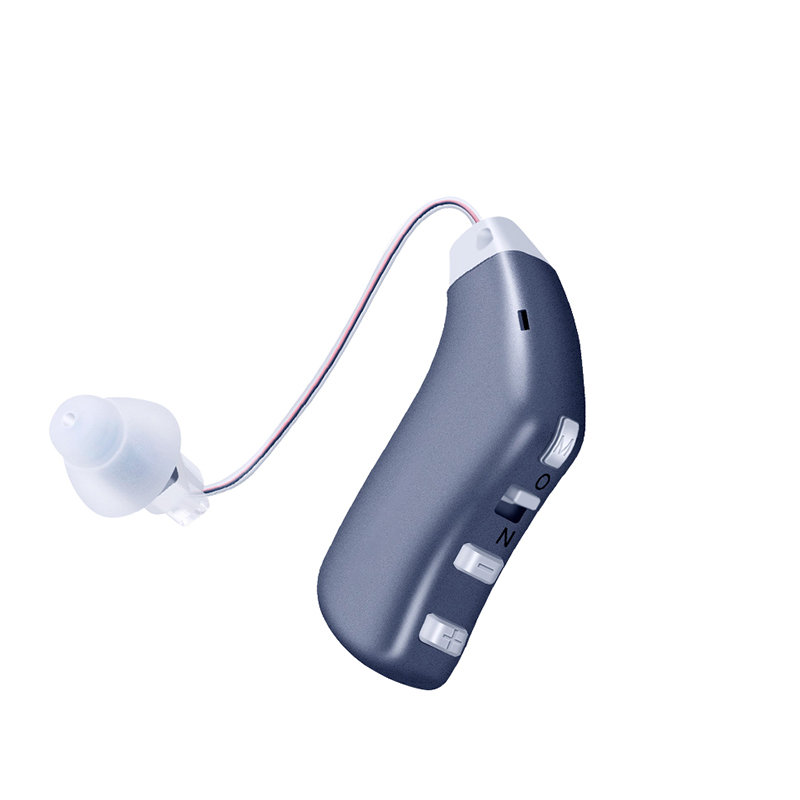
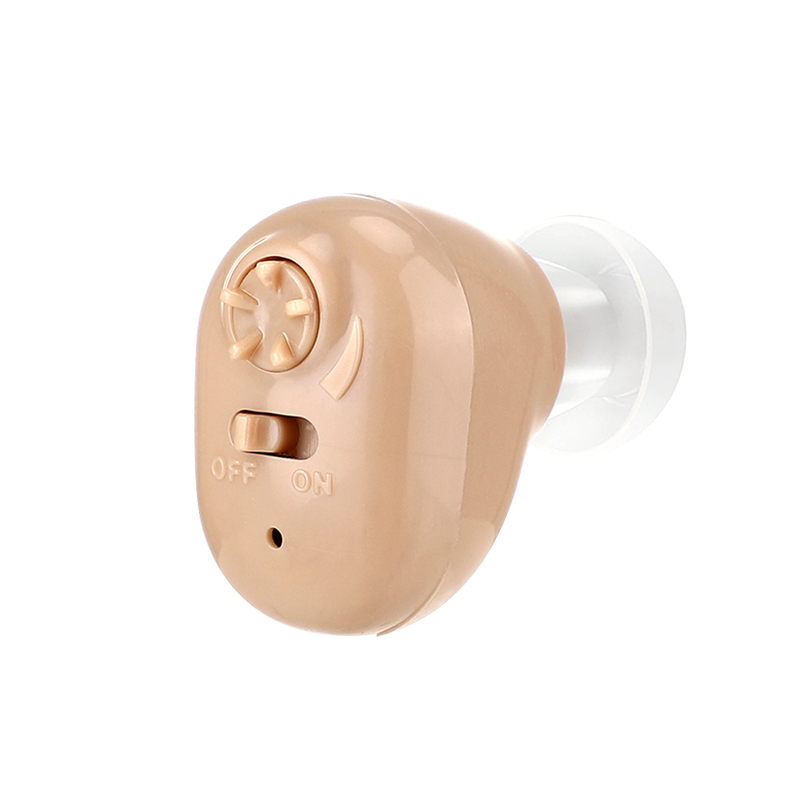
The best hearing aid for tinnitus has less to do with the physical type of aid and more to do with the technological features included in the device that help amplify sounds that might be masked or muted by a wearer’s tinnitus symptoms. Experts recommend various behind-the-ear (BTE), in-the-ear (ITE), in-the-canal (ITC), receiver-in-canal (RIC) and receiver-in-the-ear (RITE) hearing aids for people looking to relieve tinnitus symptoms.
There are a number of factors worth considering when shopping for hearing aids for tinnitus, including size, shape, Bluetooth compatibility, streaming capabilities and built-in sound enrichment technology.
Size and shape: These aspects of a hearing aid often dictate how comfortable the hearing aid wearer finds their devices. After completing a hearing health assessment with a hearing health professional, try on a number of hearing aid models from a variety of manufacturers to determine which fit feels most comfortable in your ears.
Bluetooth compatibility and streaming capabilities: A number of hearing aids designed for tinnitus relief feature sound enrichment options that require both Bluetooth compatibility and streaming capabilities. It’s also important to note whether the hearing aids you’re considering are compatible with both iOS and Android devices or only one of the two operating systems.
Built-in sound enrichment technology: For those who don’t have a smartphone or don’t want to have to stream sound enrichment to their hearing aids, there are some models available that feature built-in sound enrichment technology.
Hearing aids for tinnitus are regulated by the Food and Drug Administration (FDA), and most require a prescription and fitting from a hearing health professional, such as an audiologist. During this appointment, the expert can help you determine which hearing aids best suit your ear shape, physical needs, lifestyle and budget.
Productcompany_logoForbes Health Ratingsforbes_advisor_rating_imageView Morelearn_more_cta_below_textLearn More ReSound OMNIA5.0Shop NowOn ZipHearing's Websitehttps://www.ziphearing.com/resound-omnia?utm_source=forbes&utm_medium=referral&utm_campaign=resound Starkey Evolv AI5.0Shop NowOn ZipHearing's Websitehttps://www.ziphearing.com/starkey-evolv-ai?utm_source=forbes&utm_medium=referral&utm_campaign=starkey Widex Moment4.7Shop NowOn ZipHearing's Websitehttps://www.ziphearing.com/widex-moment?utm_source=forbes&utm_medium=referral&utm_campaign=widex Oticon More4.3Shop NowOn ZipHearing's Websitehttps://www.ziphearing.com/oticon-more?utm_source=forbes&utm_medium=referral&utm_campaign=oticon Phonak Audeo Lumity4.3Shop NowOn ZipHearing's Websitehttps://www.ziphearing.com/phonak-audeo-lumity?utm_source=forbes&utm_medium=referral&utm_campaign=phonak
High frequency tinnitus, or tinnitus that leads to a steady and continuous high-pitched ringing in the ears, is the most common type of tinnitus and can result from loud noise exposure, medication side effects and hearing loss. Hearing aids can help ease high frequency tinnitus symptoms by improving the quality of sound in one’s external environment and masking ringing sounds with the help of various white noise settings.
Beyond wearing hearing aids for tinnitus, there are a number of ways a person can cope with their tinnitus symptoms. Acupuncture can be an effective treatment for neurological tinnitus, and physicians often prescribe anti-anxiety drugs or antidepressants for people who experience intense anxiety or persistent depression due to their tinnitus symptoms. A number of psychotherapy methods and relaxation techniques can also be helpful, including biofeedback, mindfulness-based stress reduction (MBSR). Socializing with loved ones and engaging in hobbies can make a difference, too.
Audiologists can provide an initial tinnitus evaluation, which may include audiologic testing that measures the loudness and/or pitch of a person’s tinnitus. If hearing aids are a recommended treatment following diagnosis, the audiologist can also prescribe, fit and customize the devices to the individual.
Information provided on Forbes Health is for educational purposes only. Your health and wellness is unique to you, and the products and services we review may not be right for your circumstances. We do not offer individual medical advice, diagnosis or treatment plans. For personal advice, please consult with a medical professional.
Forbes Health adheres to strict editorial integrity standards. To the best of our knowledge, all content is accurate as of the date posted, though offers contained herein may no longer be available. The opinions expressed are the author’s alone and have not been provided, approved or otherwise endorsed by our advertisers.
Alena is a professional writer, editor and manager with a lifelong passion for helping others live well. She is also a registered yoga teacher (RYT-200) and a functional medicine certified health coach. She brings more than a decade of media experience to Forbes Health, with a keen focus on building content strategy, ensuring top content quality and empowering readers to make the best health and wellness decisions for themselves.
Recharge Hearing Aid Abigail Friend is a board-certified audiologist practicing at Proliance Surgeons South Seattle Otolaryngology in Burien, Washington. Having family members with hearing loss, she understands the impact of hearing loss on a personal level. This experience led her to become an advocate for people with hearing loss and how it affects their lives and those around them. She believes all patients are unique and require personalized care for their individual needs. Friend strives to provide a personal touch in the diagnostic and prescriptive treatment of her patients, and she’s experienced in working with a range of ages from small children to older adults. Working alongside ear, nose and throat physicians, Friend is able to collaborate on providing the best options and treatments for her patients.